

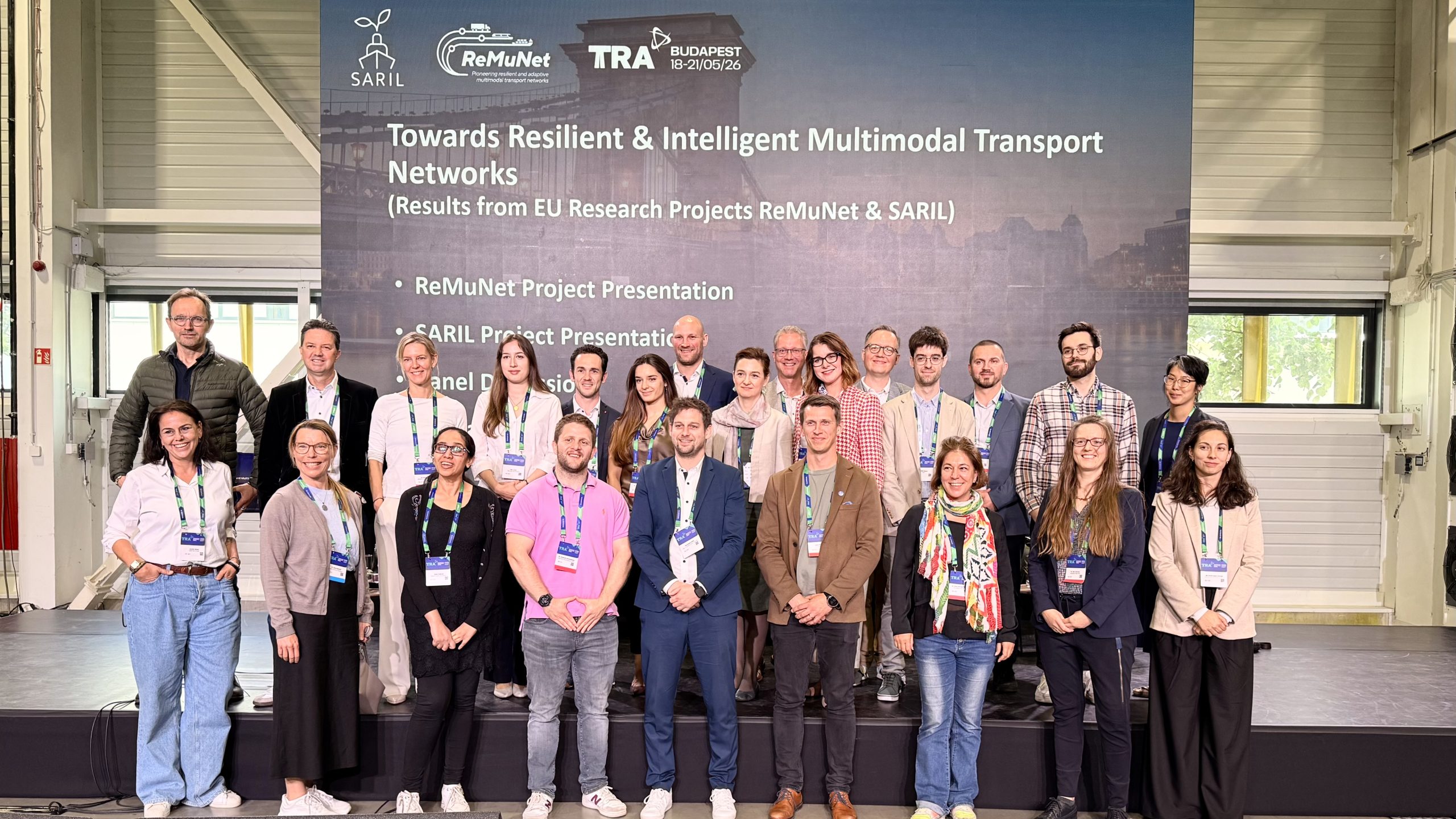
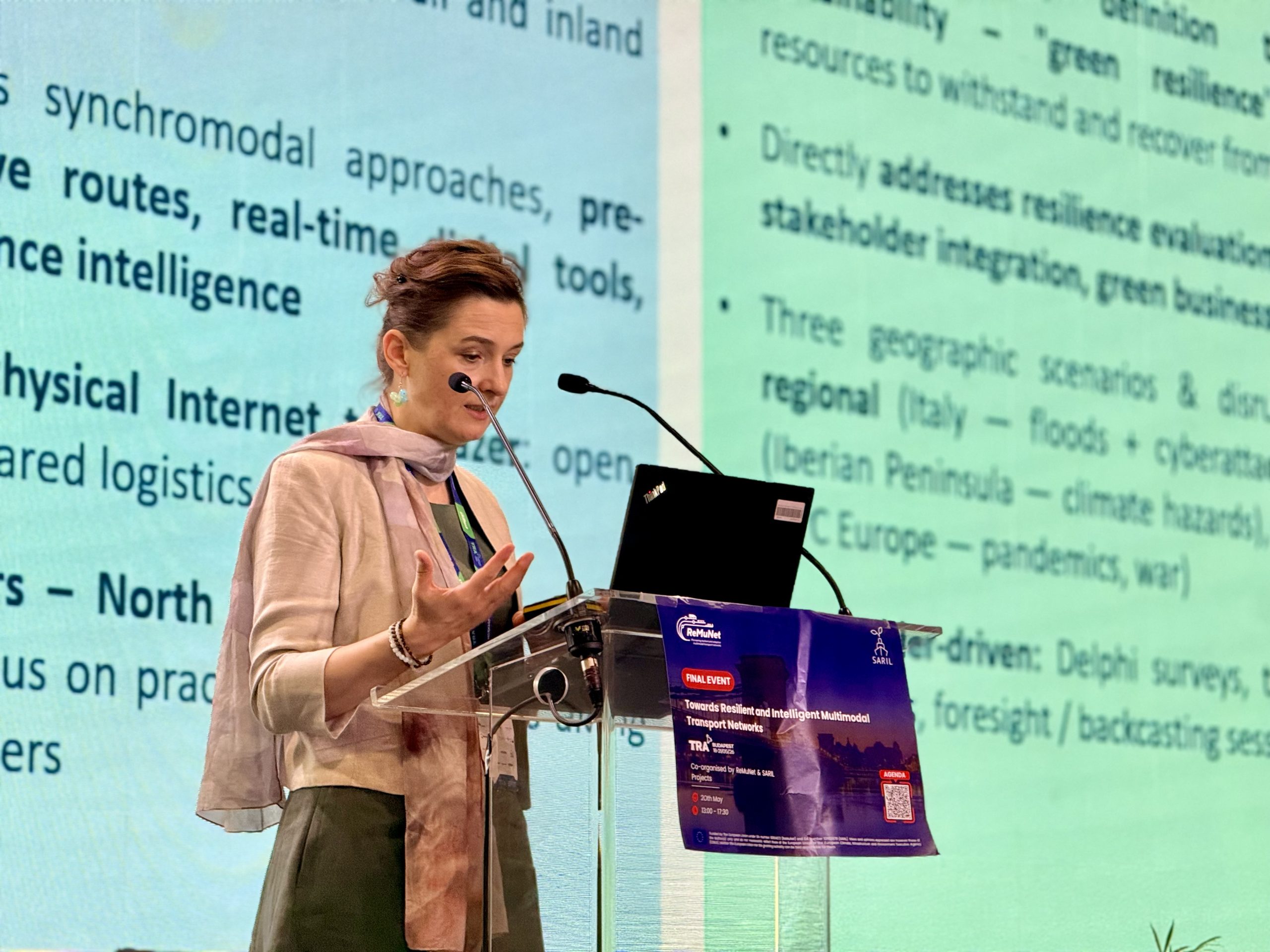
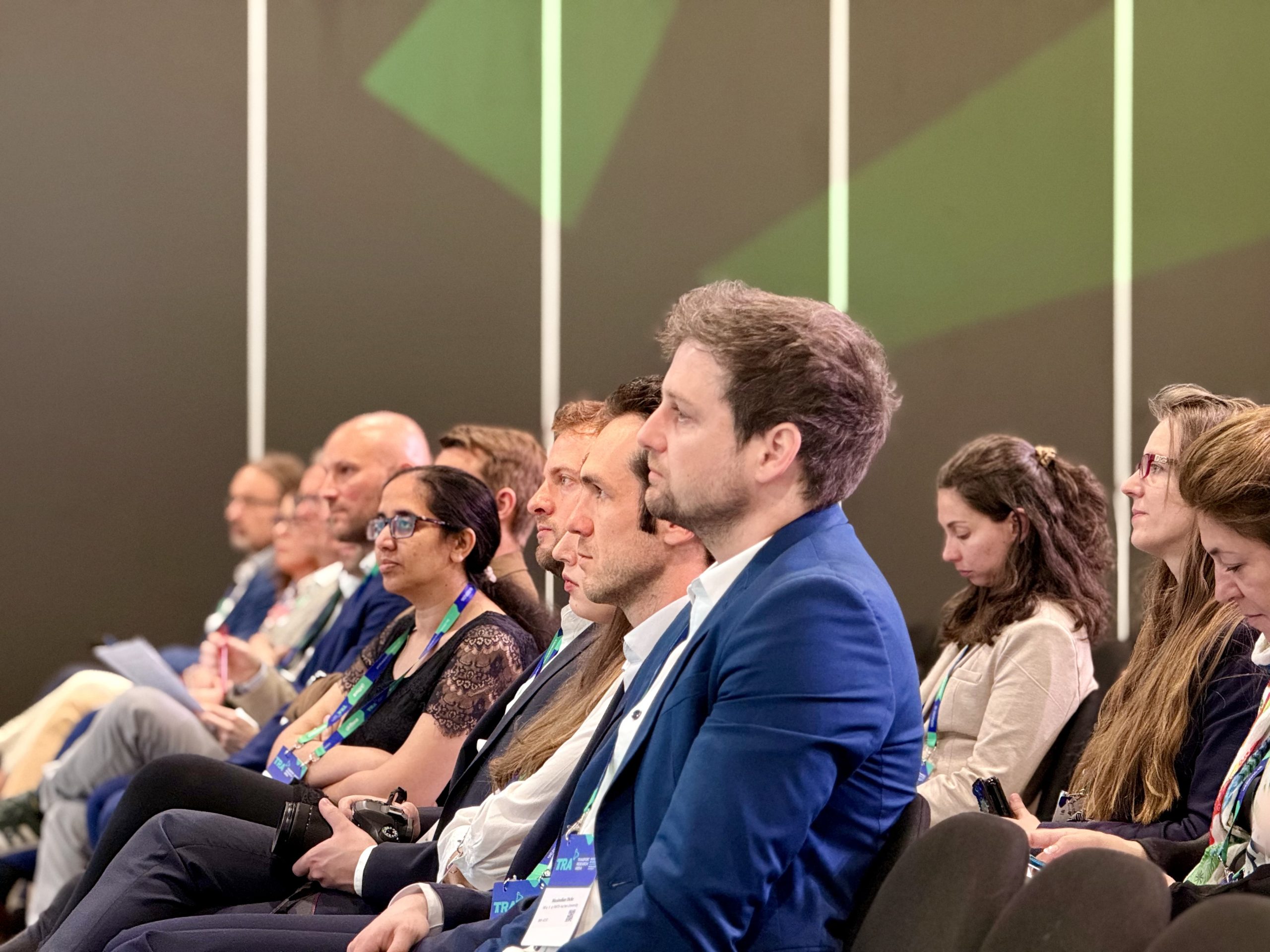

On 20 May 2026, stakeholders from across the European logistics and transport sector gathered in Budapest during TRA 2026 for the joint final event of the ReMuNet and SARIL projects. Bringing together researchers, industry representatives, policymakers, technology providers and logistics operators, the event showcased how digital innovation, real-time data and artificial intelligence can strengthen the resilience of multimodal freight transport networks.
The EU project SARIL addressed similar challenges by developing concepts, tools and recommendations for green resilience in freight transport and logistics. SARIL introduced green resilience metrics and a methodology linking sustainability with resilience, applied across multiple scales of the European transport system. The project delivered software tools for different stakeholder roles, from infrastructure operators to operational logistics managers, providing real-time information on disruptions, predictive capabilities and the potential to implement synchro-modality. Additionally, SARIL evaluated existing and future mitigation measures, assessed their transferability, and produced business models and recommendations supporting Resilience-by-Design approaches.
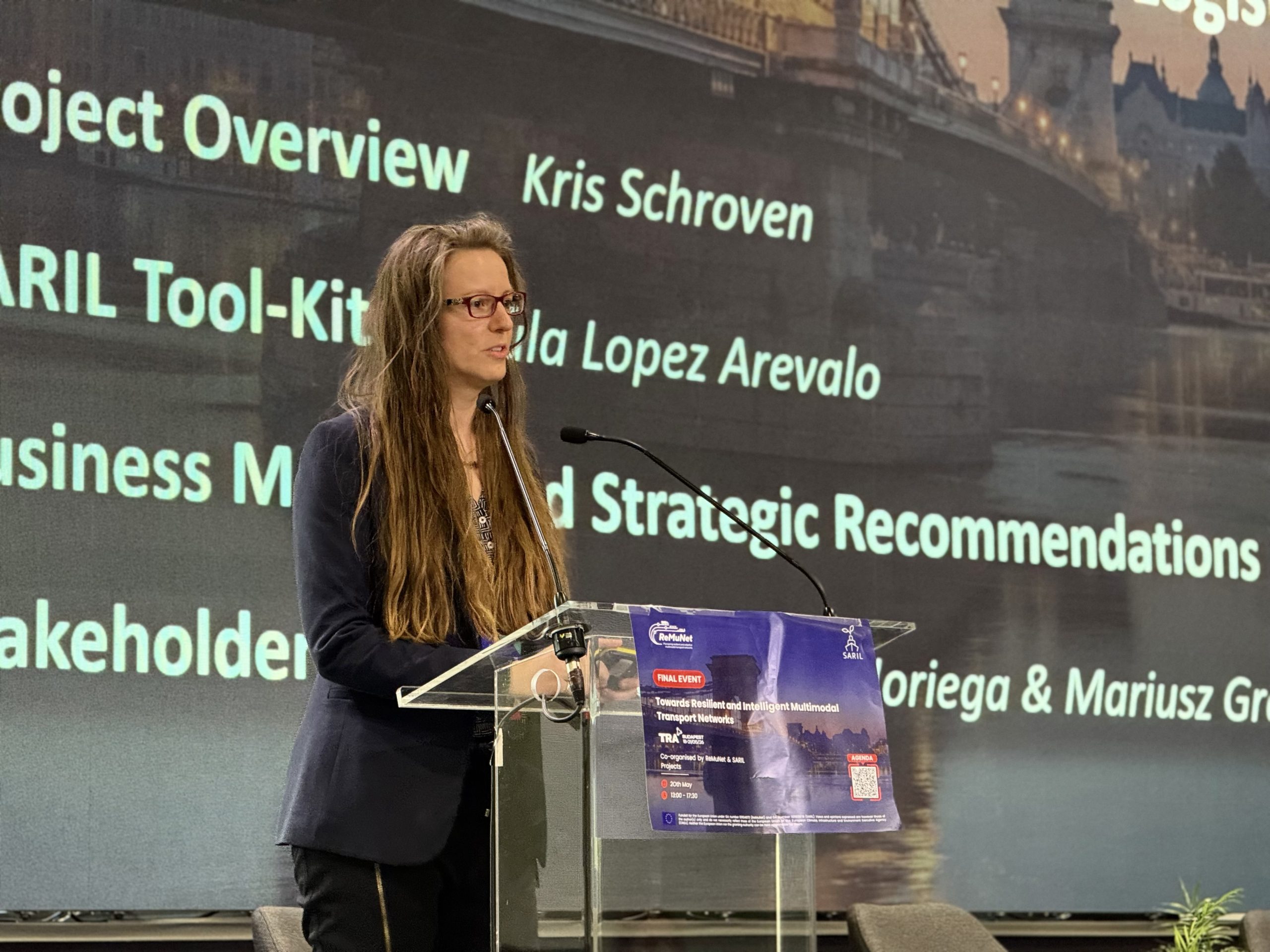
“It was a great event to exchange on the achievements of both projects. We enjoyed the discussions between R&D and industry and take it into account for our further development of solutions and tools, that enable green resilience assessments for fright-transport and logistics.” – Kris Schroven, SARIL coordinator
For both projects, the event marked the culmination of three years of collaboration towards a common goal: enabling a faster, more adaptive response to disruptions across European rail, road and inland waterway networks. More importantly, it provided an opportunity to demonstrate how the project’s vision has evolved into a working proof of concept supported by practical tools, validated use cases and strong engagement from industry stakeholders.
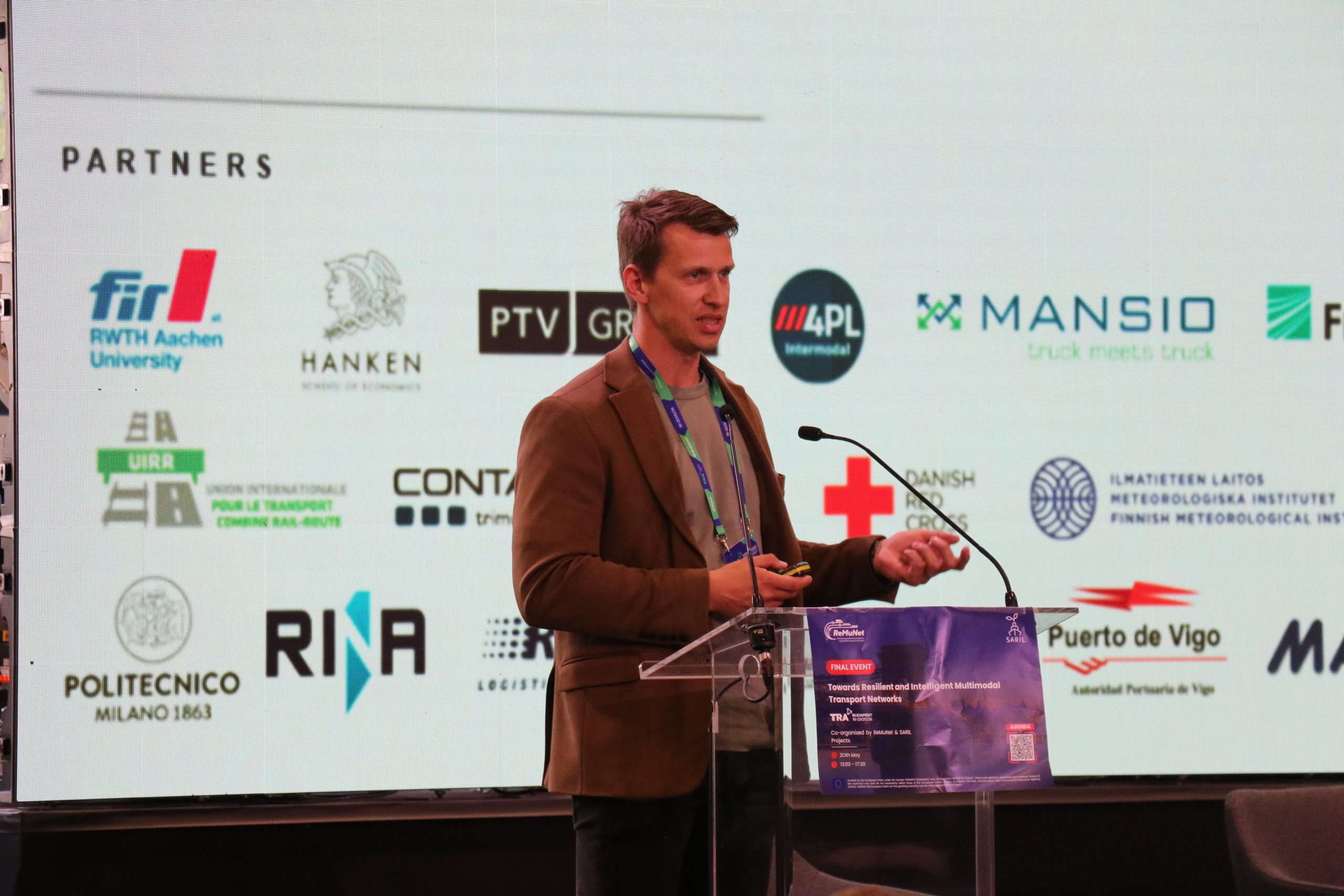
“Vediafi is in charge of the pilots and testing of the ReMuNet platform (WP5). Therefore, it was a pleasure to announce that the Proof of Concept is now available. The PoC covers the core features of the synchromodal relay transport tool, providing a solid foundation for future development. From a business perspective, a booking feature and a federated disruptive event data space would be game changers for achieving more resilient and multimodal transport. For sure we will continue the development. – Lasse Nykänen
Turning resilience from a concept into a practical solution
Freight transport disruptions are becoming increasingly common. Extreme weather events, infrastructure failures, geopolitical tensions, labour shortages and cyber threats all place growing pressure on supply chains. ReMuNet was created to address this challenge by developing technologies and methodologies that help transport operators anticipate disruptions, assess their impact and identify alternative multimodal routes in real time.
During the final event, partners demonstrated how the ReMuNet platform combines disruption detection, intelligent routing, capacity allocation and collaborative decision-making to support more resilient freight operations. By connecting transport stakeholders and enabling dynamic rerouting across different transport modes, the platform offers a practical approach to maintaining freight flows when parts of the network become unavailable.
Building the intelligence behind resilient transport
One of the project’s major achievements was the development of a comprehensive disruption intelligence framework. Research conducted throughout the project led to the creation of a typology of disruptive events, root-cause analyses and methodologies for understanding how disruptions propagate through transport networks, supply chains and society.
These insights formed the basis of the Disruptions Module (DEM), a risk assessment tool that transforms historical disruption data into practical, corridor-specific risk scores. Rather than relying solely on travel times and costs, transport planners can use disruption intelligence to better understand the vulnerabilities of specific routes and nodes throughout the year.
The project also demonstrated how disruption risk assessment can be applied to some of Europe’s most challenging transport environments. A notable example presented during the event was the humanitarian logistics corridor connecting the Baltic region with Ukraine. Using real operational data and expert knowledge, ReMuNet developed risk profiles and routing scenarios for humanitarian aid deliveries in a highly complex and uncertain environment, demonstrating the flexibility and robustness of the project’s approach.
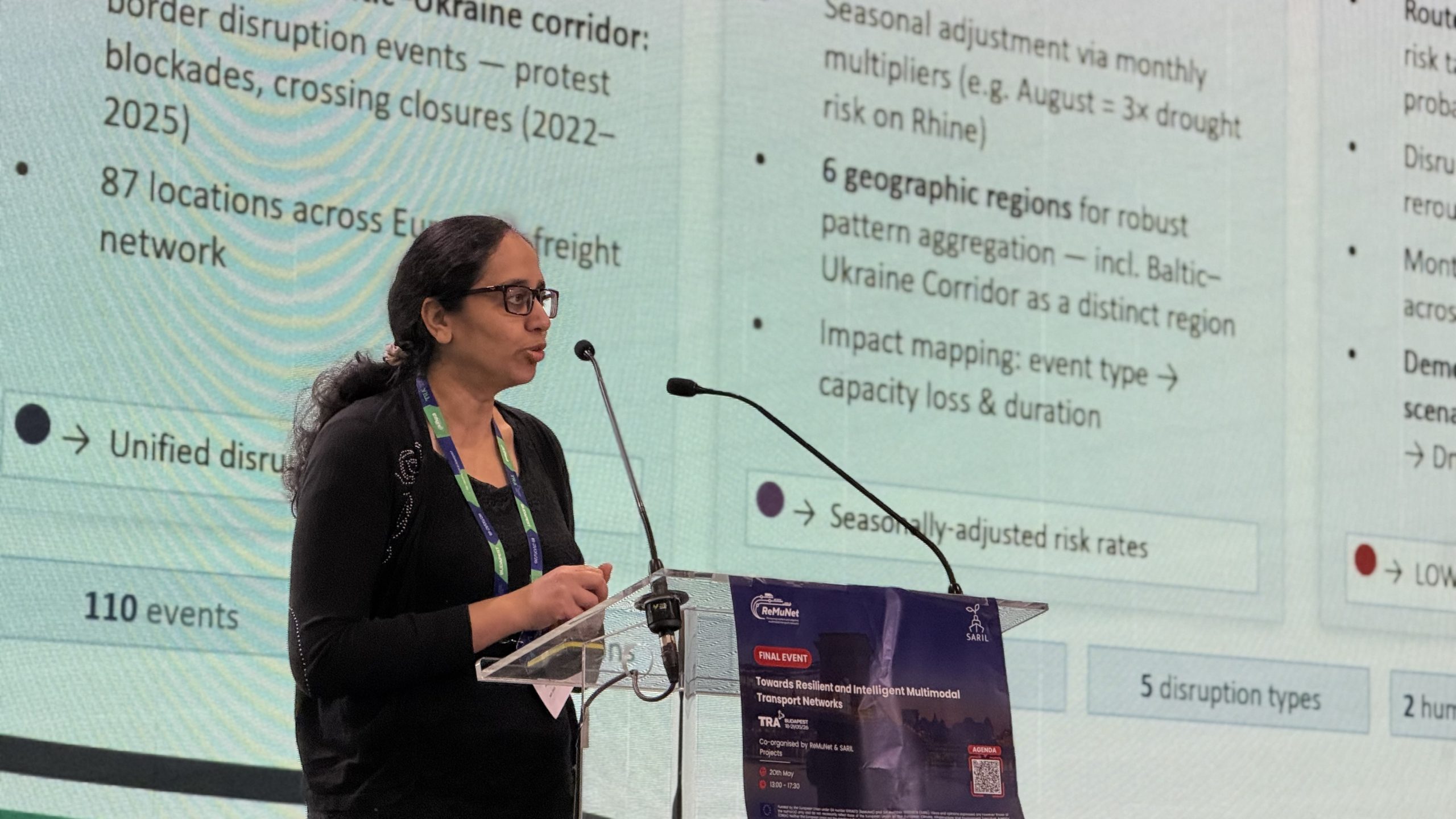
“ReMuNet’s core contribution is not multimodal routing — that already exists — but disruption-aware routing: building risk intelligence into the platform itself. The project invested deeply in understanding disruptions as a system, bridging the gap between how stakeholders experience disruption and what algorithms can act on. A key insight from our pilot work is that extreme use cases — like humanitarian aid delivery to Ukraine — are not edge cases to be handled later, but design drivers that surface platform requirements invisible under normal conditions. The foundation is built; the next step is full integration of risk intelligence into routing decisions, and continued stress-testing against the hardest problems European freight faces.”— Ketki Kulkarni
From planning to decision support in multimodal networks
Beyond strategic modelling, ReMuNet also demonstrated a range of operational capabilities designed to support real-time decision-making.
The project showcased intelligent intermodal routing services capable of generating and evaluating alternative door-to-door transport chains under both normal and disrupted conditions. These services integrate network data, disruption information and operational constraints to support more informed routing decisions across multiple transport modes.
Real-time visibility services further strengthened operational awareness by providing continuous tracking, predictive estimated arrival times and disruption notifications. Together, these tools enable logistics stakeholders to respond more quickly and effectively when transport conditions change.
A central objective of these developments is to reduce fragmentation in multimodal transport operations. By improving transparency and enabling shared situational awareness, ReMuNet demonstrates how collaboration between stakeholders can significantly enhance the resilience of freight networks.
Industry confirms the need for resilience
A recurring theme throughout the final event was the strong relevance of ReMuNet’s vision for the transport sector.
During the closing panel discussion, participants highlighted how resilience is increasingly becoming a strategic priority for logistics providers. Much like sustainability evolved from a regulatory requirement into a competitive advantage, resilience is emerging as a key differentiator for companies seeking to operate successfully in an increasingly uncertain environment.
Industry representatives stressed that the technologies demonstrated by ReMuNet are important building blocks for the future, but also emphasised the need for wider collaboration. Data standardisation, real-time information sharing, interoperability between systems and stronger cooperation across organisations were repeatedly identified as critical factors for achieving truly resilient transport networks.
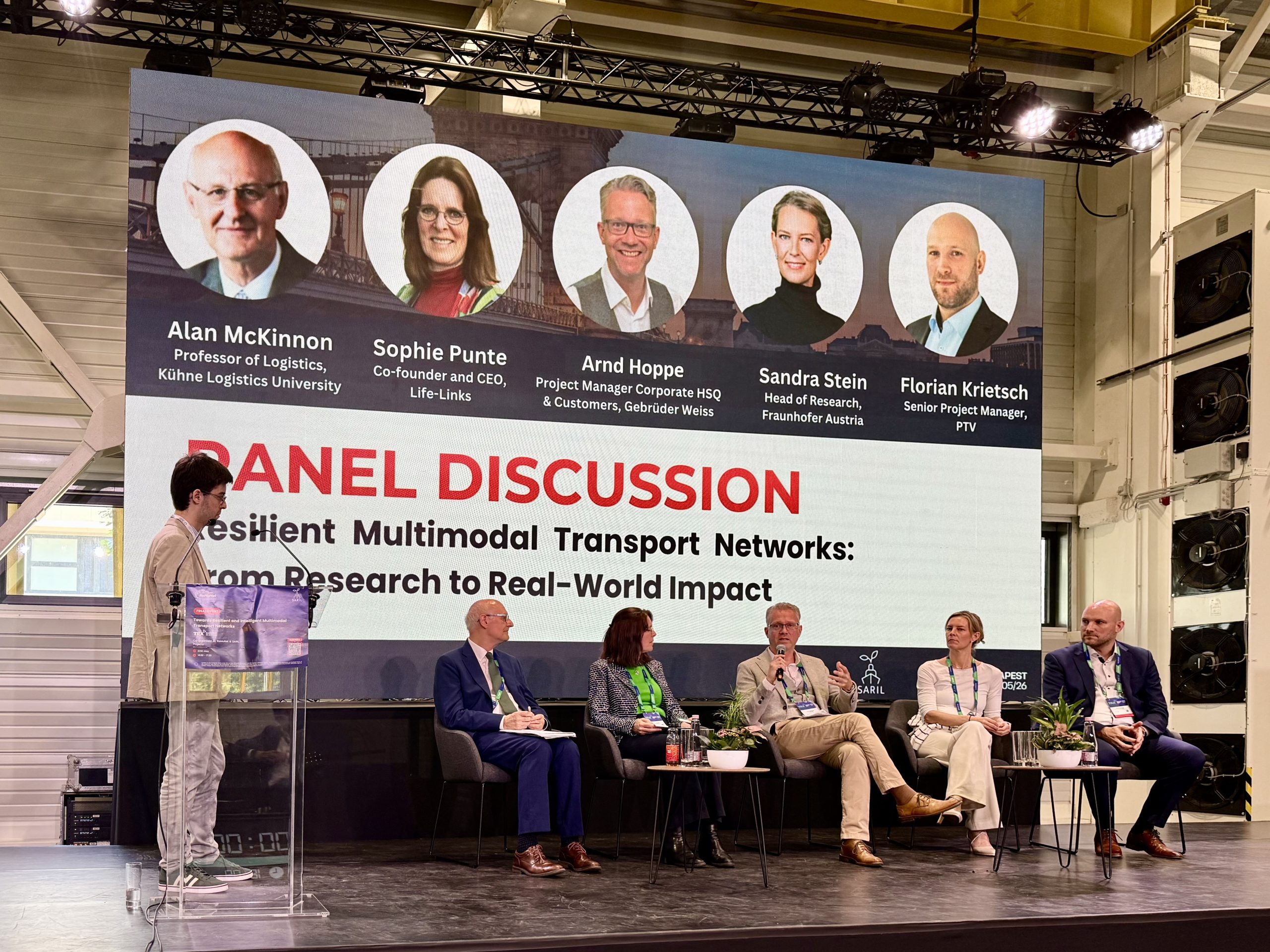
Transport should not be viewed as an isolated sector, but as a critical system underpinning Europe’s economy and society. When transport networks fail, the consequences extend to energy supply, healthcare, food distribution, industry and humanitarian operations. Building resilience therefore benefits far more than logistics alone. (Moderator: Pablo Segura – ALICE Participants: Alan Mckinoon – Kühne Logistics, Sophie Punte – Life Links, Arnd Hoppe – Gebrüder Weiss, Sandra Stein – Fraunhofer Austria, Floran Krietsch – PTV)
Looking ahead
As the project comes to an end, the consortium leaves behind more than a technological proof of concept. ReMuNet has demonstrated that disruption-aware multimodal transport planning is achievable through a combination of data, collaboration and intelligent digital tools.
The final event made clear that the next challenge is not proving the concept, but scaling it. Achieving the full ReMuNet vision will require broader stakeholder participation, greater data availability, common standards and continued investment in collaborative digital infrastructures. Advances in artificial intelligence, real-time data integration and cross-border information exchange will further accelerate this transition.
The project’s final discussions reflected a shared optimism. The foundations have been laid, the technologies have been demonstrated, and the need has been confirmed by industry. While the journey towards fully resilient European freight transport continues, ReMuNet has shown that a more adaptive, connected and disruption-ready logistics network is within reach.
As Europe faces an increasingly complex transport landscape, the project’s legacy will not be measured solely by the tools it developed, but by the momentum it has created towards a future where resilience becomes a core characteristic of multimodal freight transport.
Find the presentations here.
Acknowledgements


 Funded by the European Union under GA number 101104072. Views and opinions expressed are however those of the author(s) only and do not necessarily reflect those of the European Union or the European Climate, Infrastructure and Environment Executive Agency (CINEA). Neither the European Union nor the granting authority can be held responsible for them.